Why the Fifth Time Restarting a Fitness Routine Actually Sticks Better Than the First
Restarting a fitness routine for the fifth or sixth time can feel like proof of a pattern of failure, but there’s a real, practical case that each restart attempt is actually building something the previous ones didn’t have.

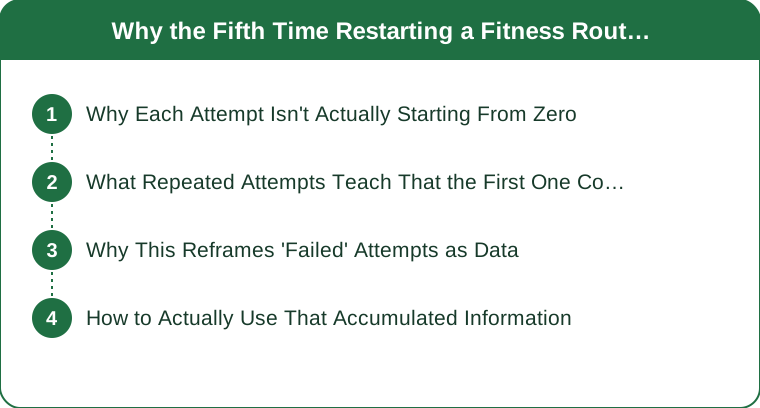
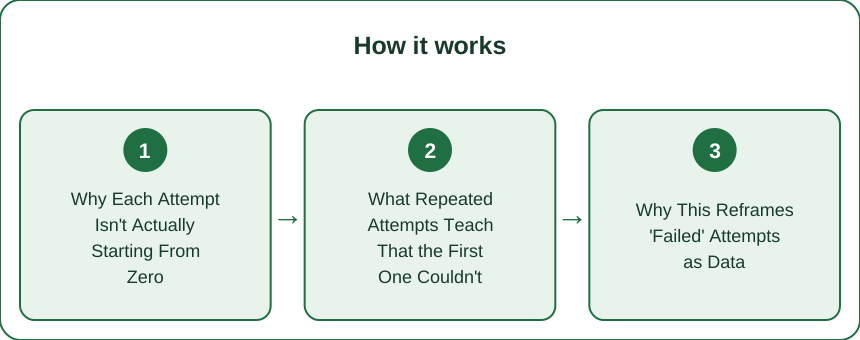
Why Each Attempt Isn’t Actually Starting From Zero
The accumulated advantage: physiological research on muscle memory showing that previously trained muscle retains structural and cellular adaptations that make regained strength and conditioning come back measurably faster than it took to build the first time.
What Repeated Attempts Teach That the First One Couldn’t
The experiential advantage: someone on a fifth restart having already learned, often the hard way, which specific obstacles, schedule conflicts, unrealistic starting intensity, lack of enjoyment, derailed the previous attempts, information a first-time starter simply doesn’t have yet.

Why This Reframes ‘Failed’ Attempts as Data
The mindset shift: each previous restart that didn’t stick functioning less as a failure and more as a specific, identifiable data point about what doesn’t work for that particular person’s actual life and constraints.
How to Actually Use That Accumulated Information
The practical application: deliberately reviewing what specifically derailed the last two or three attempts before starting again, and designing the new attempt around avoiding those exact triggers rather than just repeating the same generic plan, and the frame (a fifth restart carries real physiological muscle memory and hard-won knowledge about personal failure points that a first attempt doesn’t have — treating past attempts as data rather than failure is what actually makes the next one more likely to stick.)
Restarting a fitness routine for the fifth or sixth time can feel like proof of a pattern of failure, but physiological research on muscle memory shows that previously trained muscle retains structural and cellular adaptations that make regained strength and conditioning come back measurably faster than it took to build the first time, meaning each attempt isn’t actually starting from zero. Someone on a fifth restart has also already learned, often the hard way, which specific obstacles, schedule conflicts, unrealistic starting intensity, lack of enjoyment, derailed the previous attempts, information a first-time starter simply doesn’t have yet, which means each previous restart that didn’t stick functions less as a failure and more as a specific data point about what doesn’t work for that particular person’s actual life. Deliberately reviewing what specifically derailed the last two or three attempts before starting again, and designing the new attempt around avoiding those exact triggers, uses that accumulated information in a way that makes the next attempt genuinely more likely to stick than just repeating the same generic plan.
Keep Reading
This article is for general informational purposes only and is not medical advice. Always consult a qualified health professional for guidance specific to you.