The Specific Week Most Fitness Restarts Fail — and How to Get Past It
Quick Answer: Initial motivation and novelty typically carry a restart through the first two weeks, but by week three the soreness has usually faded, the routine has become familiar rather than exciting, and visible results haven’t appeared yet — a specific low-motivation gap that causes more restart attempts to collapse in week three than in any other single week.
Knowing this pattern in advance is one of the most effective tools for actually getting past it.

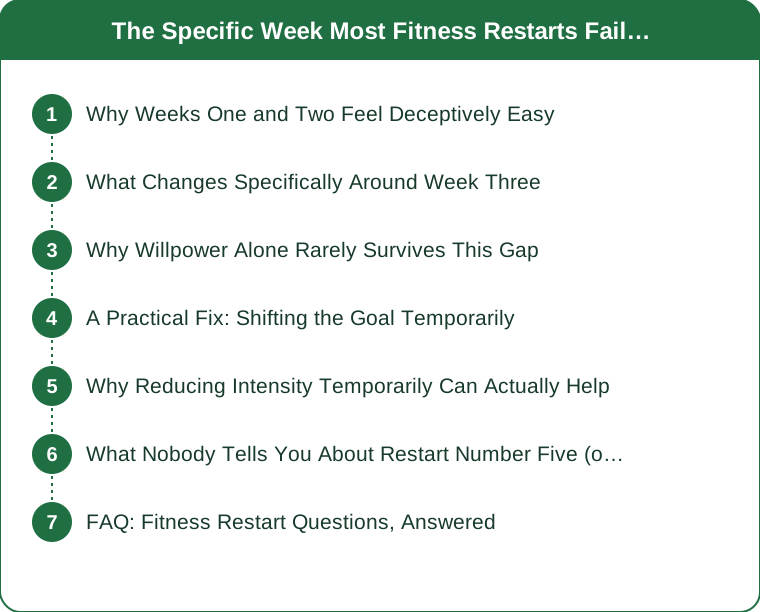
Why Weeks One and Two Feel Deceptively Easy
The first stretch of a restart is carried by motivation, novelty, and the satisfaction of simply showing up again after time away — none of which are sustainable fuel sources on their own. Early soreness even reinforces the feeling of progress, since it’s tangible proof something happened, even though genuine fitness or strength gains this early are minimal.
What Changes Specifically Around Week Three
By week three, the body has typically adapted enough that soreness fades, the schedule has become routine rather than novel, and — critically — visible physical changes still haven’t caught up, since meaningful visible results generally take 6-8 weeks minimum. This creates a motivation gap: the initial excitement has worn off, but the reward hasn’t arrived yet, which is exactly the window where restart attempts most commonly stall.
Why Willpower Alone Rarely Survives This Gap
Relying purely on discipline to push through a motivation dip generally works for a session or two but rarely for the sustained multi-week gap between novelty fading and results appearing. People who build in external structure — a workout partner, a scheduled class, a coach check-in — tend to get through week three at meaningfully higher rates than those relying on self-motivation alone, because the structure doesn’t depend on how motivated any single day feels.

A Practical Fix: Shifting the Goal Temporarily
Rather than chasing visible results that genuinely aren’t available yet, shifting the week-three goal to something immediately measurable — a specific number of sessions completed, a small strength benchmark, consistency itself as the metric — gives a concrete win that doesn’t depend on physique changes showing up on schedule. This reframing bridges the exact gap where motivation typically runs out before results begin.
Why Reducing Intensity Temporarily Can Actually Help
If week three brings genuine burnout rather than just boredom, deliberately reducing workout intensity for a few sessions — shorter sessions, lighter loads, an easier format — while maintaining the habit of showing up is often more effective long-term than pushing through at full intensity and burning out completely. Protecting the habit matters more at this stage than protecting the intensity.
What Nobody Tells You About Restart Number Five (or Fifteen)
A later restart attempt, even after several prior failed ones, often has a genuine physiological advantage: muscle memory means previously trained muscle tissue can rebuild strength faster than it built the first time, so week-three-you on a fifth restart attempt may already be measurably stronger than week-three-you was on the first attempt, even if it doesn’t feel that way in the moment.
FAQ: Fitness Restart Questions, Answered
Is it normal to have multiple failed restart attempts before one sticks?
Yes — this is an extremely common pattern, and each attempt, even ones that stall at week three, tends to build some retained fitness and habit familiarity that makes the next attempt somewhat easier.
Should I change my whole routine if I stall at week three again?
Not necessarily the whole routine — often just adjusting the accountability structure or temporarily lowering intensity addresses the actual problem more directly than an entirely new program.
How long does the week-three motivation dip typically last?
For most people, pushing through with adjusted expectations for about a week resolves it, since results generally start becoming noticeable not long after, which naturally restores motivation.
TL;DR:
- Weeks one and two are carried by novelty and soreness-as-progress, not real motivation infrastructure
- Week three is a specific gap: novelty fades before visible results arrive, which is when most restarts stall
- External structure (a partner, class, or check-in) survives this gap better than willpower alone
- Shifting the goal to consistency itself, or temporarily lowering intensity, protects the habit through the dip
Knowing week three is coming doesn’t make it effortless, but it turns a mysterious loss of motivation into an expected, plannable obstacle — which makes it a lot easier to get past.
Keep Reading
This article is for general informational purposes only and is not medical advice. Always consult a qualified health professional for guidance specific to you.