Restarting Fitness With the Two-Minute Rule: Embarrassingly Small on Purpose
Quick Answer: After a fitness layoff, the real enemy is activation cost — the mental weight of ‘a workout’ keeps the streak at zero. The two-minute rule shrinks the commitment below the resistance threshold: the assignment is two minutes (shoes on + walk to the corner, one set of squats, 90 seconds of stretching), done daily. Most days, starting triggers more; on the days it doesn’t, two minutes still banked the identity. Scale up only after two weeks of showing up feels automatic.
The fifth restart fails like the previous four for the same reason: it begins at ‘three 45-minute sessions a week’ — a plan sized for the person you were, assigned to the person currently negotiating with the couch. The couch keeps winning not because you’re weak, but because the opening bid was huge.

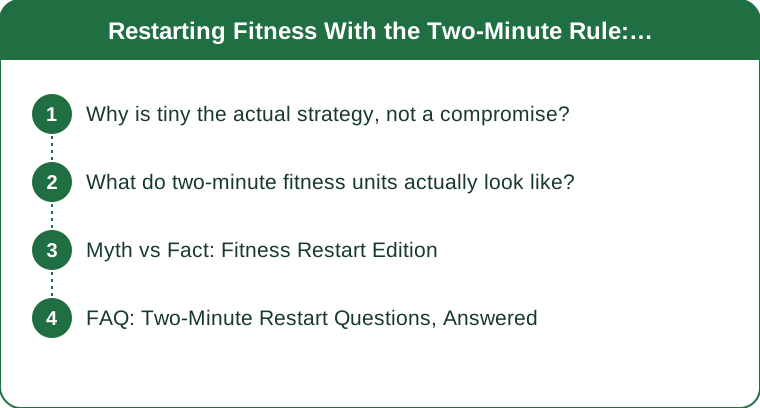
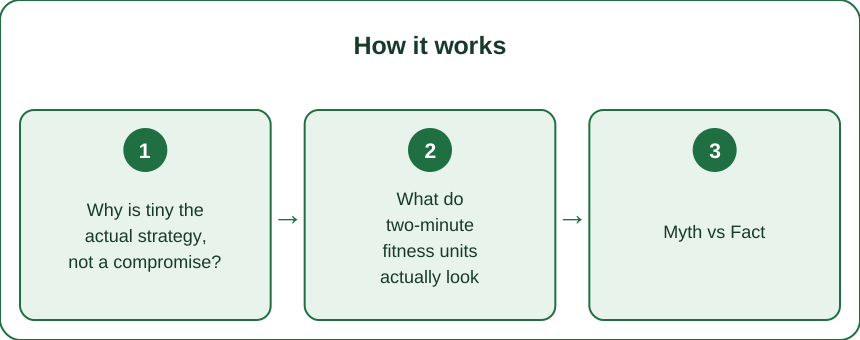
Why is tiny the actual strategy, not a compromise?
The restart problem is mis-modeled as a fitness problem when it’s an activation problem:
- The resistance is front-loaded: the hard part of a comeback workout is minutes zero through two — shoes, door, starting. Post-layoff, the brain prices ‘a workout’ at its full remembered cost (45 sweaty minutes plus tomorrow’s soreness), and that price triggers avoidance before any movement happens. The two-minute frame re-prices the decision to something the resistance can’t justify blocking.
- Identity precedes volume: habit research’s consistent finding — frequency builds automaticity, not duration. Fourteen consecutive two-minute days rebuilds ‘I’m someone who moves daily’ far better than two heroic sessions and five skips; and identity is the engine every future increase runs on.
- The physiology cooperates: after weeks-to-months off, tissue tolerance is down — the classic restart injury is week-two enthusiasm meeting deconditioned tendons. The tiny opening is accidentally perfect progressive loading.
The rule’s fine print that makes it work: two minutes genuinely counts as complete. The day you do only two minutes is a green calendar day, full stop — the moment two minutes becomes ‘the warm-up you failed to extend,’ the re-pricing collapses and the resistance returns.
What do two-minute fitness units actually look like?
The menu (pick one per day, vary freely):
- Shoes on, walk to the corner and back
- One set of bodyweight squats + one set of wall push-ups
- 90 seconds of stretching on the mat you left visible
- One flight of stairs, twice
- Dance to exactly one song (the most-sustained unit on the whole menu, empirically)
The environment design that carries it: the two-minute version must be frictionless — shoes by the door, mat unrolled somewhere visible, the song queued. Every removed step protects the streak on the low-energy days the system exists for.
The scaling law: let it pull, never push. Most days, two minutes becomes ten because starting dissolved the resistance — allow it happily. But the assignment stays two minutes until showing up feels boringly automatic (typically 2-3 weeks), then graduates gently: five-minute assignment, then ten, then structure. The classic error is promoting the assignment after the first good week — which re-installs the big opening bid the system existed to remove.
(Returning from injury or illness rather than plain busyness: the two-minute rule pairs with, never replaces, professional clearance and guidance. This is general information, not medical advice.)

Myth vs Fact: Fitness Restart Edition
Myth: Two minutes is physiologically pointless. Fact: As exercise, nearly — as behavioral architecture, it’s the whole building. The system’s product in month one is a person who moves daily without internal debate; the fitness volume gets built on that foundation in months two and three, and sticks because the foundation exists.
Myth: Real progress requires feeling challenged from day one. Fact: The restart graveyard is full of appropriately-challenged day-ones followed by three-day soreness and week-two abandonment. Post-layoff, the challenge that matters is calendar density, and two minutes challenges precisely the muscle that atrophied: showing up.
Myth: If you were fit before, you can skip the tiny phase. Fact: Former fitness makes the tiny phase more necessary, not less — the memory of past capacity is exactly what inflates opening bids and turns week one into an ego-vs-tendons negotiation. The two-minute frame protects returners from their own highlight reel; the strength comes back fast once the streak exists (muscle memory is real), which is all the more reason not to lose the streak to week-two soreness.
The quiet reframe underneath: the fifth restart isn’t evidence you fail at fitness — it’s evidence the previous four plans were priced wrong.
FAQ: Two-Minute Restart Questions, Answered
Doesn’t this take forever to reach ‘real’ workouts?
Typical honest timeline: 2-3 weeks of two-minute automaticity, graduating through 5-10 minute assignments, landing at structured 20-30 minute sessions around weeks 5-8 — with the difference that this version is still running at month six, which the ambitious restarts never were. Slower to the workout; dramatically faster to the habit.
What about days I’m sick or truly wrecked?
The system’s finest hour: two minutes of gentle stretching in pajamas keeps the chain alive at near-zero cost — and chain-alive is the entire asset. (Actual illness that needs rest gets rest; a marked ‘rest day’ decided deliberately differs from a skip, and the calendar can honestly show both.)
Should I track anything beyond the streak?
Month one: the streak only — a calendar and a pen; measurement pressure is opening-bid inflation in disguise. From month two, add whatever serves the graduated assignments (sets, minutes, distance). The order matters: consistency first, metrics on top of consistency, never instead of it.
TL;DR:
- The restart barrier is activation cost, not ability — two minutes re-prices the decision below the resistance threshold
- Two minutes counts as COMPLETE: green calendar day, identity banked, no ‘failed warm-up’ framing ever
- Environment does the heavy lifting: shoes visible, mat out, song queued; let sessions grow by pull, never push
- Graduate the assignment only after showing up feels boring (2-3 weeks) — especially if you were fit before
The couch was never beating you — it was outbidding you, and you just lowered the stakes below its interest. This is general information, not medical advice.
Keep Reading
This article is for general informational purposes only and is not medical advice. Always consult a qualified health professional for guidance specific to you.